Serving Bannock County & Southeast Idaho Mon–Fri 7am–6pm, Sat 8am–2pm  |  (208) 852-8975

The Complete Guide to Concrete Leveling in Pocatello, ID

Everything you need to know about fixing uneven, sunken, or settled concrete in Southeast Idaho.

If you've ever caught your foot on a raised sidewalk panel, felt the thump of a sunken driveway slab, or noticed water pooling on your concrete after a rain, you're dealing with a concrete settlement problem. It's one of the most common homeowner issues in Southeast Idaho, and one of the most misunderstood. This guide covers everything: what causes concrete to settle, how leveling works, what it costs in the Bannock County area, the difference between leveling methods, and how to choose the right contractor.

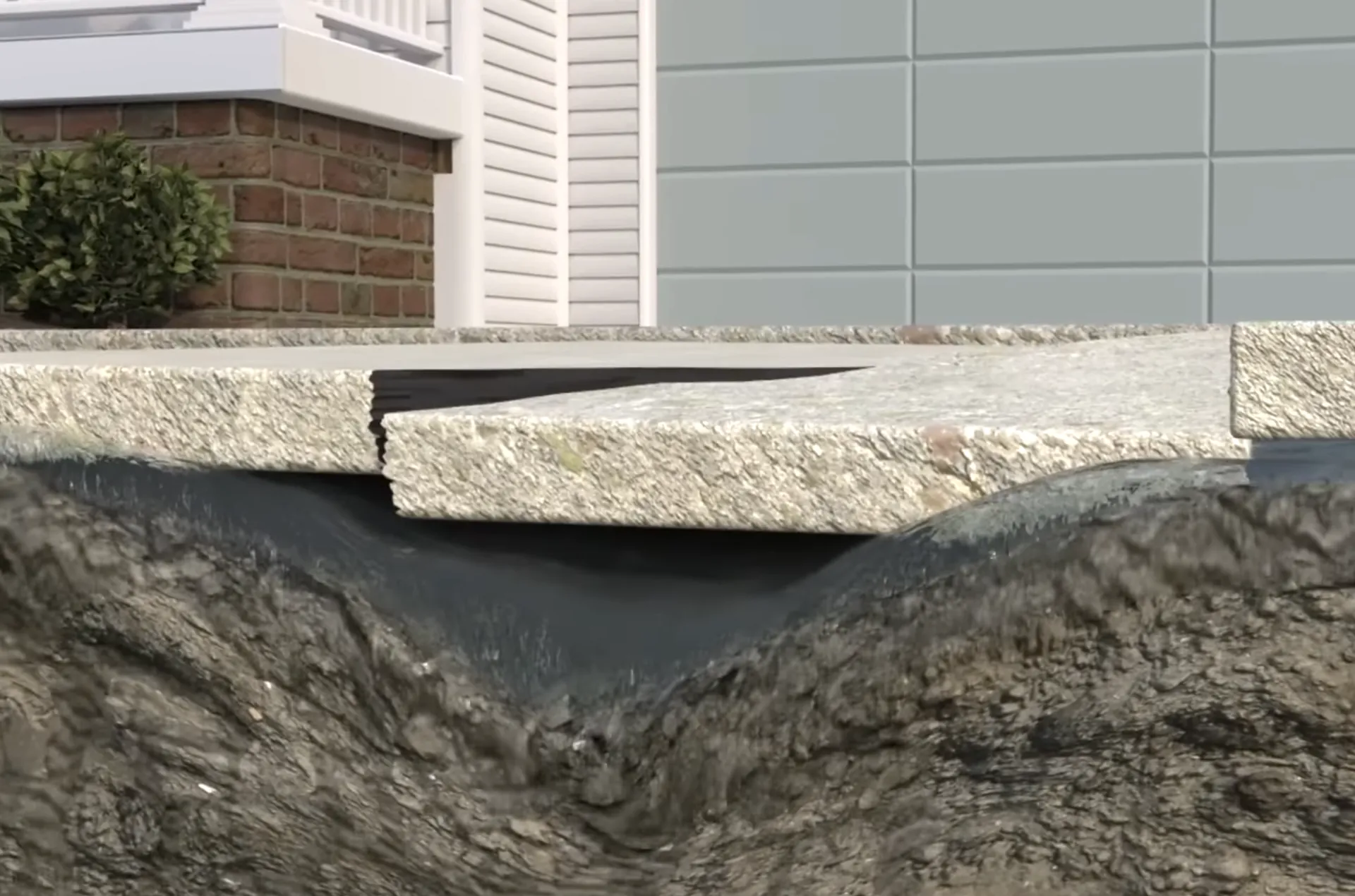
Diagram showing soil voids beneath a settled concrete slab - the cause of concrete leveling problems in Southeast Idaho

1. What Is Concrete Settlement and Why Does It Happen?

Concrete settlement occurs when the soil beneath a slab shifts, compresses, or washes away, leaving a void, or simply becoming less dense, so the concrete above it slowly sinks. The concrete itself hasn't failed; the ground supporting it has.

This is an important distinction. When most people see cracked or uneven concrete, they assume the concrete is the problem. But in the majority of cases we handle, the concrete is perfectly reusable, it just needs to be lifted back into position and supported properly.

Why Southeast Idaho Soil Is Particularly Prone to Settling

This region sits in a high-desert environment in southeastern Idaho with a semi-arid climate. Several local factors make concrete settlement especially common here:

  • Freeze-thaw cycles: The region's winters bring hard freezes that cause moisture in the soil to expand, pushing slabs upward (frost heave), and then contract when the ground thaws, leaving voids and instability behind. Over many seasons, this cycle gradually displaces concrete.
  • Irrigation and snowmelt: The region's irrigation-heavy summer culture, combined with spring snowmelt, introduces large amounts of water into the soil over a short period. This water erodes fine soil particles from beneath slabs and softens compacted subbase material.
  • Fill soils and construction practices: Many neighborhoods in this area were developed on areas where fill dirt was placed to level lots. Fill soil that wasn't properly compacted at the time of installation will gradually compress under the weight of concrete over the following years.
  • Root activity: The Portneuf Valley's topography and soil conditions support mature trees whose roots extend under hardscape. When roots grow, they lift slabs. When roots die back or are removed, slabs drop.
  • Underground utilities: Older neighborhoods throughout Bannock County have had many utility trenches dug and backfilled over the decades. Poorly compacted trench backfill is a very common cause of driveway and sidewalk settlement along utility corridors.

2. How to Tell If Your Concrete Needs Leveling

Concrete settlement doesn't always announce itself dramatically. Sometimes it's gradual enough that you don't notice until the problem has become significant. Here are the warning signs to look for around your property:

Visible Signs

  • One concrete panel visibly higher or lower than the one next to it, even a ¾-inch step is a trip hazard
  • Gaps or cracks at the joints between panels that have grown wider over time
  • Visible space or daylight beneath the edge of a slab when viewed from the side
  • A driveway panel that has dropped away from the garage floor threshold
  • Cracks running diagonally across the corner of a slab (indicating the corner has dropped)

Drainage Signs

  • Water pooling on your driveway or patio after rain rather than draining away
  • Water that now drains toward your foundation or garage instead of away from the house
  • Wet soil or erosion visible under the edge of a concrete slab

Feel and Function Signs

  • A distinct "thump" or bump when you drive over a particular spot in your driveway
  • Rocking or slight movement when you walk across a slab (indicating a void beneath)
  • A garage door bottom seal that's damaged or no longer seals properly because the driveway has dropped

If you notice any of these signs, the smart move is to have a professional assess the situation before the settlement worsens. Settled concrete rarely self-corrects, and the longer you wait, the more the underlying soil problem can develop.

3. Concrete Leveling Methods Explained

There are a few distinct approaches to leveling settled concrete. Understanding the differences will help you have an informed conversation with any contractor you call.

Mudjacking (Slabjacking)

Mudjacking is the original and most established method of concrete lifting. It involves drilling holes through the settled slab and pumping a dense slurry, typically a mixture of soil, Portland cement, and water, beneath the slab under controlled pressure. As the material fills voids and the pressure builds, the slab rises.

Pros: Affordable, proven method with decades of track record; material is denser and heavier, which some contractors argue provides better long-term support; lower cost per square foot than polyurethane options.

Cons: Heavier material means more load on the subgrade; slightly larger drill holes (1.5" vs. 5/8" for poly foam); longer cure time before driving (typically a few hours to overnight).

Best for: Driveways, large patios, sidewalks, any application where cost-effectiveness is the priority and the concrete is structurally sound.

Polyurethane Foam Lifting (Polyjacking)

Polyurethane foam lifting is a newer method where two-component expanding foam is injected through small holes. The foam expands beneath the slab, filling voids and lifting the concrete. It cures in minutes rather than hours.

Pros: Very fast cure time (walkable in 15 minutes); smaller drill holes; lightweight material; good for tight access areas.

Cons: Significantly higher cost than mudjacking, often 2–3x more expensive; foam degrades over time in certain soil/moisture conditions; less proven long-term in harsh freeze-thaw climates.

Best for: Interior slabs (basements, warehouse floors) where fast cure time is critical; areas with limited access for larger equipment.

Self-Leveling Concrete Overlay

This isn't a lifting method, it's a surface treatment. A thin layer of self-leveling compound is poured over an existing floor to create a flat surface. This does nothing to address settlement and is only appropriate for interior floors with cosmetic irregularities, not for outdoor slabs that have physically sunk.

Full Concrete Replacement

The most expensive option, and often unnecessary. Replacement makes sense when the existing slab is structurally compromised, crumbling, broken into pieces, or severely deteriorated. But for slabs that have simply settled (which is the vast majority of cases we handle), lifting is the correct and more economical solution.

4. Concrete Leveling Costs in Bannock County

One of the most common questions we hear is: "How much will this cost?" Here's a realistic breakdown of what you can expect to pay for concrete leveling in this area.

Typical Price Ranges (Mudjacking)

Project TypeTypical Range in Bannock County
Single sidewalk panel (4×4 or 4×6 ft)$150–$350
3–5 sidewalk panels$350–$750
Driveway apron (1–2 slabs)$300–$600
Single driveway panel near garage$250–$500
Full driveway (multiple slabs)$600–$1,500+
Patio leveling$400–$1,200
Garage floor section$300–$800

Compare these figures to full concrete replacement in this area, which typically runs $6–$12 per square foot installed, meaning a 300 sq ft section could cost $1,800–$3,600 or more to replace, versus $500–$900 to level.

Factors That Affect Concrete Leveling Cost

  • Size of the settled area: More square footage means more material and labor.
  • Severity of settlement: A slab that needs to be raised 4 inches requires more material than one that needs to be raised 1 inch.
  • Access difficulty: Slabs in tight spaces (against fences, near landscaping) take longer to work around.
  • Number of drill holes required: Larger slabs or slabs with complex settlement patterns need more injection points.
  • Condition of the concrete: Heavily cracked slabs may require extra care to lift without further fracturing.

The Real Cost Comparison: Leveling vs. Replacement

To put it plainly: for a typical homeowner in Bannock County dealing with a sunken driveway section or a few settled sidewalk panels, concrete leveling will cost somewhere between 30% and 60% of what full replacement would cost, for the same functional result, in a fraction of the time. Over the life of the concrete, that represents significant savings.

5. Repair vs. Replace: Making the Right Call

This is the central question of every concrete assessment. Here's how we think about it:

Choose Leveling When:

  • The slab has settled but is structurally intact (no severe crumbling or multiple fractures)
  • The slab can still function as a single unit when lifted
  • The settlement is less than about 4–6 inches (very deep settlement may point to a serious underlying issue)
  • The concrete is otherwise in reasonable condition, surface wear and minor cracks are fine
  • Cost savings are a priority and the existing concrete has several years of service life remaining

Choose Replacement When:

  • The slab is severely cracked and broken into multiple pieces that can't be lifted as a unit
  • The concrete is spalling (the surface is flaking away in chunks), significantly deteriorated, or less than 3 inches thick
  • There is an active underground problem (broken sewer pipe, compromised foundation drainage) that needs excavation to fix, in that case, replacement is inevitable anyway
  • The existing concrete is old enough that lifting it would be cost-throwing-good-money-after-bad

A good, honest contractor will tell you which category you fall into during the estimate, even if the answer is "you need replacement," not leveling. Be wary of any contractor who recommends leveling for severely damaged concrete just to make a sale, or who recommends replacement without first assessing whether leveling is viable.

6. DIY Concrete Leveling vs. Hiring a Professional

You may have seen products marketed as DIY concrete leveling solutions, usually bags of self-leveling mix or small foam injection kits. Here's our honest assessment:

For very minor surface irregularities on interior floors, consumer-grade self-leveling compounds can be effective. But for outdoor concrete that has physically settled due to soil issues, DIY approaches fall short for several reasons:

  • Proper leveling requires controlled, even pressure to raise a slab without cracking it, this takes equipment and experience, not a consumer kit
  • Identifying where the void is and how many injection points are needed requires professional assessment
  • If you crack the slab during a DIY attempt, you've turned a levelable problem into a replacement problem
  • The materials used by professionals (especially for mudjacking) are mixed and calibrated for soil conditions in a way that consumer products aren't

For outdoor concrete settlement in Southeast Idaho, hiring a professional concrete leveling company is the correct approach in nearly every case. The cost is low enough, especially compared to replacement, that attempting to DIY rarely makes financial sense.

7. How to Choose a Concrete Leveling Contractor

Not all concrete leveling companies are equal. Here's what to look for when comparing contractors in the Bannock County area:

Ask These Questions Before Hiring

  • Are you licensed and insured in Idaho?, Any legitimate contractor operating in Idaho should carry general liability insurance. Don't hire anyone who hesitates to provide proof of insurance.
  • How long have you been doing concrete leveling in this area?, Local experience matters. A contractor who understands Idaho's soil conditions, freeze-thaw cycle, and typical settlement patterns will do better work than one from out of the area.
  • What materials do you use for mudjacking?, Understand what's going in under your slab. Ask about the mix design and whether it's appropriate for Idaho's climate.
  • Do you provide written estimates?, Any professional should give you a written quote before starting work. Be very cautious of verbal-only estimates.
  • What kind of warranty do you offer?, Reputable companies typically offer at least a 1–2 year warranty on their work. Ask what it covers and what it doesn't.
  • Can you provide local references or reviews?, Look for reviews from actual local customers. Ask if you can speak with a past customer who had similar work done.

Red Flags to Watch For

  • No written estimate, only a "ballpark" number
  • High-pressure sales tactics or urgency about scheduling
  • No insurance or vague answers about licensing
  • Recommending full replacement for a slab that's a clear leveling candidate
  • Recommending leveling for a slab that's clearly too damaged to be lifted
  • No clear explanation of the process or materials

8. After Concrete Leveling: What to Expect and How to Protect Your Investment

Concrete leveling is durable, but it isn't magic. Here's how to get the most out of your repaired slabs:

Immediately After the Job

  • For mudjacking, avoid driving on the repaired area for at least 4–8 hours (we'll give you a specific recommendation based on conditions).
  • The drill holes will be patched with a concrete mix. These patches will be slightly visible initially but will blend over time as the concrete weathers.
  • Some minor settling of the patch material is normal. If a patch looks slightly sunken after a week, contact us, it's usually a quick fix.

Long-Term Maintenance

  • Control water at the source: The number one enemy of concrete in this region is water infiltrating the soil beneath the slab. Keep gutters and downspouts pointed away from your concrete. Fill any gaps at the edge of slabs with concrete caulk to prevent water infiltration.
  • Seal your concrete joints: The control joints (the lines cut into your concrete) and expansion joints (the spaces between slabs) should be sealed every few years. This prevents water from channeling directly beneath the slab.
  • Address tree roots proactively: If you have large trees near concrete, talk to an arborist about root management. It's much cheaper to manage roots than to repeatedly lift slabs they've disturbed.
  • Watch for new settlement: If you notice a panel beginning to drop again within a year or two of leveling, it may indicate an ongoing drainage or soil issue that warrants further investigation.

How Long Will Concrete Leveling Last?

With proper mudjacking, a leveled slab in Idaho can remain stable for 8–15 years or more. The main variable is whether the underlying cause of settlement has been addressed. If a chronic drainage problem is funneling water under your slab every spring, even the best leveling job will eventually re-settle. A quality contractor will identify contributing factors during the estimate and advise you on any corrective action needed.

9. Concrete Leveling Throughout Pocatello and Bannock County

We service the communities of Bannock County and the surrounding area. Here's a quick overview of areas we commonly work in and any location-specific factors worth noting:

Pocatello (83201, 83202, 83204, 83205)

The city's older neighborhoods, especially those near the Portneuf River and along the benches on the east side of town, often have mature landscaping and older concrete that has experienced significant movement over the decades. The varied topography also creates natural drainage challenges that affect concrete longevity.

Chubbuck

Much of Chubbuck was developed in the latter half of the 20th century on relatively flat terrain, but irrigation from residential landscaping and the high-desert soil profile creates settlement conditions similar to those in the city. Driveway apron settlement is especially common in Chubbuck due to the soil conditions near many subdivisions.

American Falls

American Falls and the surrounding Power County area experience similar freeze-thaw conditions. The proximity to the Snake River plain means some areas deal with expansive soils, clays that expand when wet and contract when dry, creating repeated movement cycles for concrete.

Inkom, Lava Hot Springs, and McCammon

These smaller communities in Bannock County share many of the same soil and climate characteristics as the rest of the region. We provide full service to these areas and typically schedule these as part of our regular service days in the region.

10. Summary: Key Takeaways for Southeast Idaho Homeowners

  • Concrete settlement in Southeast Idaho is common and caused by natural soil behavior, freeze-thaw cycles, and drainage, not necessarily bad concrete.
  • Mudjacking (concrete leveling) is the most cost-effective solution for settled slabs that are still structurally sound, typically 30–70% cheaper than replacement.
  • Most residential leveling jobs in this area are completed in 2–4 hours and allow same-day use.
  • The key to long-lasting results is identifying and correcting the water/drainage issue that caused the settlement in the first place.
  • Always get a written estimate, ask for references, and verify insurance before hiring any concrete contractor.

Ready to Get Your Concrete Assessed?

We offer free, no-pressure written estimates throughout Bannock County and Southeast Idaho. Give us a call or fill out our quick estimate form, we typically respond within 1 business hour.

Have Settled Concrete in Southeast Idaho?

Call us or request your free estimate online, we'll tell you exactly what you're dealing with and what it'll cost to fix.

Call Now Free Quote